

Are you seeking a means of earning an ordinary profit out of your investments without draining your savings? A Systematic Withdrawal Plan (SWP) can be your answer whether you are about to retire or need a monthly cash flow.
Quick tool: To plan your own monthly withdrawals, use our SWP calculator.
SWP enables investors to access a regular or unlimited amount of money in their fund investments at mutual funds with discipline, tax-effectiveness, and ease. Through this guide, we have included all you need to know about SWP, including benefits, types, and the process of setting it up, tax considerations, and traps that should be avoided.
What is a Systematic Withdrawal Plan (SWP)?
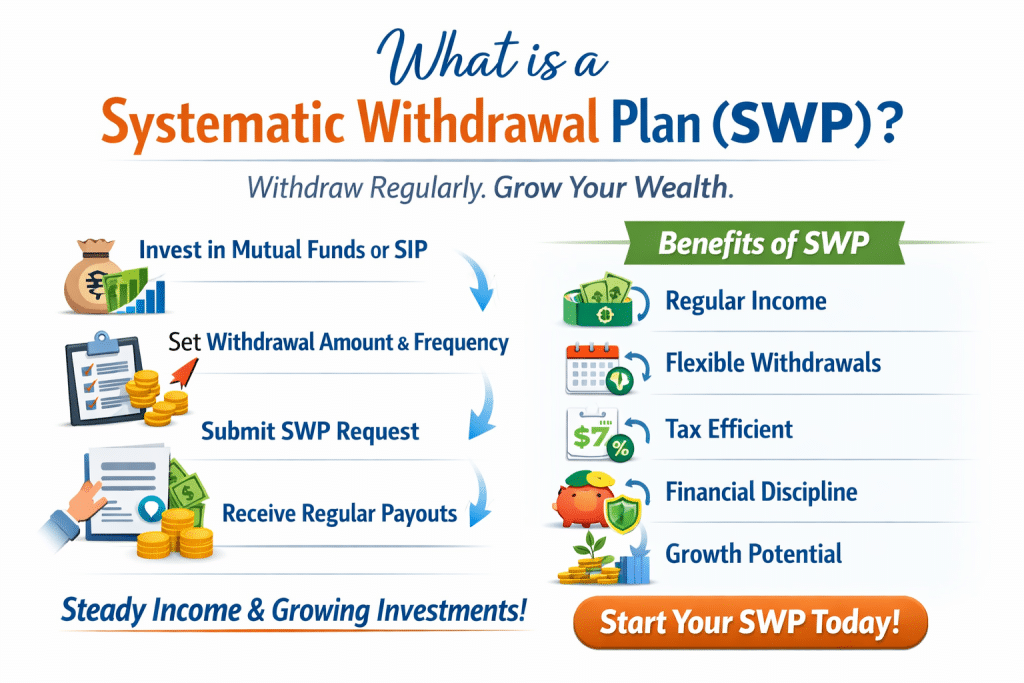
A Systematic Withdrawal Plan (SWP) is an option that is available in mutual funds and other investment plans, and that allows you to take money out of your investment corpus regularly. SWP is unlike lump-sum withdrawals as it can help you keep your investment and get periodic income.
How SWP Works:
- Invest in a mutual fund or SIP.
- Decide on the withdrawal amount and frequency (monthly, quarterly, yearly).
- Submit the SWP request.
- Get consistent dividends as your investment is growing.
Benefits of SWP
The benefits of an SWP would include:
- Regular Income: Gather a continuous flow of money, the best choice for retirees.
- Flexibility: Customize withdrawal amounts and frequency according to your needs.
- Tax Efficiency: Withdrawals can be taxed more advantageously in comparison with the lump-sum redemption.
- Financial Discipline: Encourages long-term investment without draining your corpus.
- Growth Potential: Remaining funds continue to earn returns.
Calculate Your SWP – Plan Smart Withdrawals
Would you like to know how you can withdraw on a regular basis without affecting your investments? Calculate immediate insights with our SWP Calculator. All you have to do is type in the amount you are investing, anticipated returns, and the frequency of withdrawal, and our tool will display a personalized withdrawal plan to you.
Types of Systematic Withdrawal Plans
SWPs are usually of two kinds:
| Type | Description | Best For |
|---|---|---|
| Fixed SWP | Withdraw a fixed amount at regular intervals. | Retirees or fixed-income seekers |
| Flexible SWP | Adjust withdrawal amounts based on need. | Investors with changing income requirements |
Read Also: Best SWP Plan for Monthly Income: How to Choose One
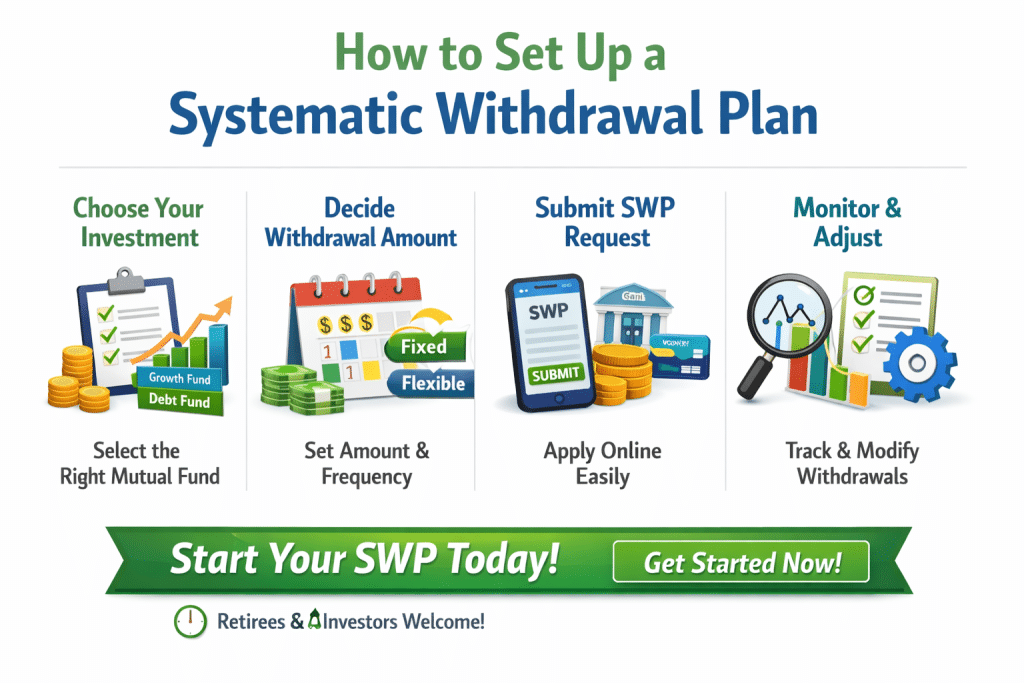
How to Set Up a Systematic Withdrawal Plan
Setting up an SWP is simple:
Choose Your Investment
Choose a fund or investment plan that fits your retirement purposes. Growth vs. debt funds based on risk.
Decide Withdrawal Amount & Frequency
Decide on the amount you shall withdraw (e.g., monthly, quarterly) and whether it will be fixed or flexible.
Submit SWP Request
A majority of mutual funds provide the option of the online SWP setup on their portal or application. Direct credit withdrawals.
Monitor & Adjust
Track your withdrawals and remaining investment periodically. Change the withdrawal levels according to the market conditions and needs.
SWP vs Lump Sum Withdrawal
Many investors wonder whether to go for SWP or withdraw a lump sum. Here’s a quick comparison:
| Feature | SWP | Lump Sum |
|---|---|---|
| Income | Regular | One-time |
| Tax Efficiency | Higher | Lower (may attract higher taxes) |
| Investment Growth | Continues | Ends after withdrawal |
| Financial Discipline | Strong | Weak |
| Risk | Moderate | High (if withdrawn during market lows) |
Bottom line: SWP is ideal for a consistent income while preserving the corpus.
Tax Implications of SWP
Tax will be determined based on the nature of the fund and the holding period:
- Each withdrawal is treated as a partial sale of units, so only the gain portion can be taxed, not the whole payout.
- If you live in the UAE, there is no personal income or capital gains tax on your investment returns here. The country where the fund is registered may still tax you, though. Indian mutual funds, for example, tax gains for NRIs, with different rules for equity and debt funds.
- Equity Funds: Long-term capital gains (LTCG) can be taxed when they are held beyond 1 year.
- Debt Funds: There are different taxations of capital gains on short-term and long-term.
- Hint: Use a tax advisor to plan the withdrawals with the least tax possible.
FAQs
Does SWP have the least investment entry?
It depends on the fund. Many fund houses let you start an SWP once your investment is above a set minimum balance, and set a minimum withdrawal per instalment. Check the scheme documents before investing.
Can I stop SWP anytime?
Yes, the majority of mutual funds permit you to cancel a SWP at any time.
How does SWP affect my corpus?
It will cut down your investment over time, yet the funds left still generate an income.
How often can I withdraw?
Depending on the options of the fund, either monthly, quarterly, or yearly.
Read Also: Fixed Deposit Rates in the UAE Compared
Conclusion
Systematic Withdrawal Plan (SWP) is one of the best plans that investors use to receive frequent and tax-efficient income without withdrawing their money. It is more flexible, disciplined, and offers growth potential for lump-sum withdrawals.


